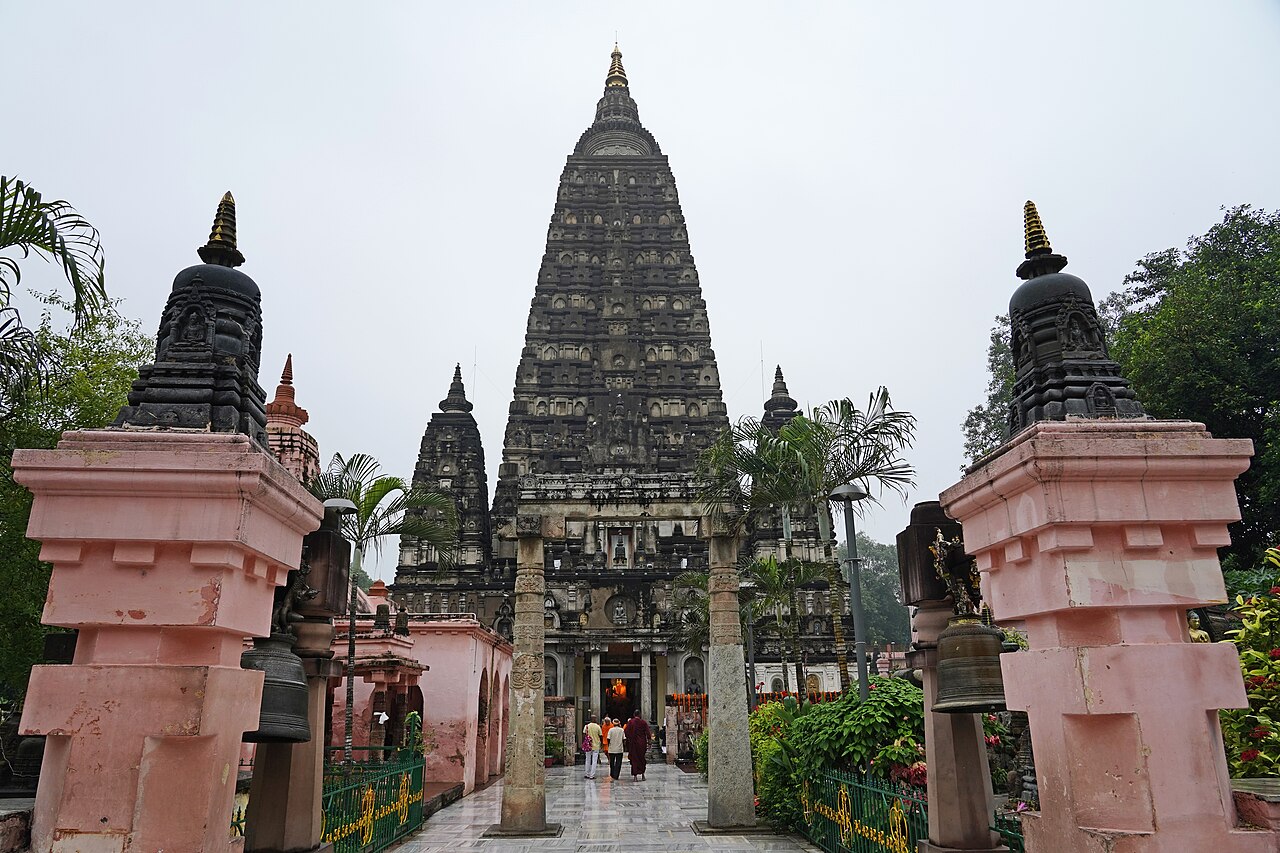
Nestled in the heart of Bihar, approximately 120 km from Patna, Bodhgaya is one of the most spiritually significant cities on earth. It is the birthplace of Buddhism: the very place where, over 2,500 years ago, Prince Siddhartha Gautama sat beneath a Peepal tree, meditated through the night, and attained enlightenment, becoming the Buddha.
The air in Bodhgaya carries a rare stillness. Monks in saffron and maroon robes walk in quiet contemplation. Prayer flags flutter from monasteries representing nations as distant as Bhutan, Japan, and Thailand. Whether one comes as a devout Buddhist pilgrim, a history enthusiast, or simply a curious traveller, Bodhgaya leaves a lasting impression.
This guide covers all the top tourist places in Bodhgaya, practical travel tips, the best time to visit, local food, transport, and excellent day trip options to nearby Rajgir and Nalanda.
Table of Contents
A Brief History of Bodhgaya
Long before it was known as Bodhgaya, this land on the western banks of the Falgu River was a small village called Uruvela. After years of royal life, Prince Siddhartha renounced all worldly pleasures and came to Uruvela in search of the ultimate truth.
He meditated here for six years, a period that is commemorated even today at the Dungeshwari Hills nearby. Eventually, he accepted a bowl of kheer (sweet rice porridge) offered by a local woman named Sujata, regained his strength and made his way to a Peepal tree beside the Niranjana River.
On a full moon night in the month of Vaisakh (Buddha Purnima), Siddhartha achieved enlightenment and became Gautama Buddha. He spent the following seven weeks meditating at seven different sacred spots around the tree. He then travelled to Sarnath, near Varanasi, to deliver his first sermon and begin the spread of the Dhamma. (Explore our guide to Top Places to Visit in Varanasi, including Sarnath for the complete Buddhist circuit.)
Over the centuries, Uruvela came to be known as Bodhgaya, the city of enlightenment, and Buddha Purnima became one of the most sacred days in the Buddhist calendar.
Top Places to Visit in Bodhgaya
1. Mahabodhi Temple Complex, The Heart of Buddhist Pilgrimage
The Mahabodhi Temple Complex is without a question the most important destination in Bodhgaya and arguably one of the holiest sites in all of Asia. In 2002, UNESCO inscribed it as a World Heritage Site, recognising its outstanding universal value to humanity.
The temple complex is built around the exact spot where Gautama Buddha attained enlightenment. The main temple is a magnificent 50-metre-tall pyramidal spire. It is believed to have been originally commissioned by Emperor Ashoka in the 3rd century BC. The present structure largely dates to the Gupta period (5th–6th century CE). Inside the sanctum sanctorum sits a large gold statue of Lord Buddha in the same Bhumisparsha mudra (earth-touching gesture) that he was in during his meditation under the Bodhi Tree.
The entire complex is an active place of worship. Monks from across the world chant sutras, lay devotees perform pradakshina around the main temple, and people sit in deep meditation at every corner. The atmosphere is unlike any other religious site in India.
Within the Mahabodhi Temple Complex, there are 7 sacred spots (Sattamahastana) associated with the seven weeks Buddha spent here after attaining enlightenment. Key ones include:
- The Vajrasana (Diamond Throne) – A polished sandstone throne installed by Emperor Ashoka marking the exact spot where Buddha sat under the Bodhi Tree.
- The Animesh Lochana Chaitya – Where Buddha stood and gazed at the Bodhi Tree for an entire week in gratitude.
- The Ratnachankrama – A raised platform on which Buddha paced back and forth; lotus carvings mark each of his footsteps.
- Muchalinda Sarovar – A beautiful lotus pond just outside the main temple. The Legend holds that during Buddha’s fifth week of meditation after enlightenment, a fierce storm broke out. The serpent king Muchalinda rose from the water and coiled his hood over Buddha to protect him from the rain. The peaceful pond evokes that story beautifully.
A guide service is available at the complex for those who wish to understand the history and significance of each spot in depth.
Important: No electronic devices including mobile phones, cameras, or laptops are permitted inside the temple complex. Free locker facilities are available at the entrance.
Mahabodhi Temple Timings & Entry Details
| Detail | Information |
|---|---|
| Timings | 5:00 AM – 9:00 PM (Open all days) |
| Morning Chanting | 5:30 AM – 6:00 AM |
| Evening Chanting | 6:00 PM – 9:00 PM |
| Entry Fee | Free for Indian and SAARC/BIMSTEC nationals |
| Camera Fee | ₹20 (still) / ₹300 (videography) |
| Electronics | Not permitted inside; free lockers at entrance |
2. The Sacred Bodhi Tree
Situated directly behind the main Mahabodhi Temple, the Bodhi Tree is the highlight of the entire pilgrimage. This massive Peepal tree (Ficus religiosa) is widely regarded as the fifth-generation descendant of the original tree under which Siddhartha Gautama meditated.
The tree is covered with thousands of prayer flags and surrounded by monks from different countries in deep meditation at almost any hour of the day. The ground around it is covered in offerings of flowers, incense, and butter lamps. Sitting below the Bodhi Tree even for a few minutes is an experience that travellers repeatedly describe as profoundly calming and peaceful.
3. Great Buddha Statue (Mahaparinirvana Statue)
A short walk from the Mahabodhi Temple complex stands the Great Buddha Statue, an 80-foot-tall sculpture of Lord Buddha seated in the Dhyana Mudra (meditation posture) on a giant lotus flower. Carved with red granite and sandstone, this statue was inaugurated by the 14th Dalai Lama in 1989 and, for a period, was the tallest Buddha statue in India.
The size and the serenity of the statue make it a popular spot for photography and contemplation. The surrounding gardens are well-maintained and peaceful.
Daijokyo Buddhist Temple
Located beside the Great Buddha Statue, the Daijokyo Buddhist Temple was established in 1983 by the Japanese Daijokyo Society. The Dalai Lama declared the statue complex sacred in 1989. The temple is a fine example of traditional Japanese Buddhist architecture and is well worth a visit alongside the Great Buddha Statue.
Great Buddha Statue Timings & Entry
| Detail | Information |
|---|---|
| Timings | 7:00 AM – 7:00 PM |
| Entry Fee | Free |
4. Thai Monastery (Wat Thai Bodhgaya)
The Thai Monastery is one of the oldest international monasteries in Bodhgaya, established in 1957 with the support of the Thai government and Buddhist monks. Built in Thai architectural style with ornate golden rooftops and intricate floral carvings, the monastery stands as a symbol of Thai devotion to the land of the Buddha.
The highlight of the monastery is a 25 metre tall cast-bronze statue of Lord Buddha placed in the garden, visible from a considerable distance. Inside the main hall are several beautifully crafted Buddha figures, Buddhist iconography, and detailed woodwork. The monastery’s gardens are tranquil and ideal for a quiet stroll.
5. Royal Bhutan Monastery
Built by the King of Bhutan as a tribute to Lord Buddha, the Royal Bhutan Monastery is a stunning example of traditional Bhutanese architecture. The monastery’s most distinctive feature is its elaborate clay carvings on the walls, which depict key events from the life of Gautama Buddha — from his birth in Lumbini to his enlightenment and parinirvana.
Inside, a seven-foot-tall golden Buddha statue serves as the centrepiece, drawing devotees and tourists in equal measure. The monastery hosts regular prayers and rituals conducted by resident monks. The surrounding gardens are lush and serene, making it one of the most peaceful spots in Bodhgaya.
Timings
| Detail | Information |
|---|---|
| Timings | 7:00 AM – 7:00 PM |
| Entry Fee | Free |
6. Indosan Nipponji Temple (Japanese Temple)
Established in 1972 via a joint effort by the Japanese government and international Buddhist communities, the Indosan Nipponji Temple is a remarkable showcase of pure Japanese Buddhist architecture. What sets this temple apart is that the entire structure is built of wood, with no nails used in its construction, following traditional Japanese joinery techniques.
The interior walls are filled with intricate Japanese paintings and carvings depicting scenes from the life of Lord Buddha. A serene Buddha idol sits at the centre of the hall. The calm, minimalist interiors offer a sharp but complementary contrast to the more decorated South Asian temples in the area.
7. Metta Buddharam Temple
The Metta Buddharam Temple is a prominent Thai Buddhist temple in Bodhgaya, recognisable by its unusual exterior. The outer walls are clad in stainless steel panels and decorative glass mosaic, giving it a contemporary, almost jewel-like appearance.
8. Dungeshwari Hills, Mahakala Caves (Pragbodhi)
Located near the banks of the Falgu River, about 12 km from Bodhgaya, the Dungeshwari Hills are also known as Mahakala Caves or Pragbodhi. They represent one of the most historically and spiritually significant sites associated with the life of Gautama Buddha.
This is the place where Siddhartha Gautama meditated for six years before his enlightenment. The cave enshrines a famous emaciated statue of Buddha, depicting him at his thinnest. It is a powerful representation of the years of intense fasting and meditation before he found the Middle Path.
What makes Dungeshwari particularly unique is that it is sacred to both Hinduism and Buddhism. The same hillside contains an ancient Dungeshwari Devi temple, making it a rare spiritual confluence of two traditions.
The surrounding hills offer opportunities for trekking amid natural beauty, and the atmosphere is remote, quiet, and charged with historical memory.
Note: Reaching the cave involves climbing a flight of stairs up the hillside. Visitors with mobility concerns should plan accordingly.
9. International Monasteries of Bodhgaya
One of the most unique aspects of Bodhgaya is that it has monasteries and temples from Buddhist nations across the world.
Beyond the ones covered above, travellers should make time to visit:
- Chinese Temple — Features classical Chinese Buddhist architecture with vivid murals.
- Taiwanese Temple — Known for its elaborate decorations and a vibrant, colourful aesthetic.
- Mahabodhi Parahita Myanmar Temple — Reflecting the rich Burmese Theravada tradition.
- Bangladesh Buddhist Monastery — A serene space representing South Asian Buddhist heritage.
A morning or afternoon spent walking from monastery to monastery is one of the most rewarding experiences Bodhgaya offers. Each temple reveals a different cultural lens through which the Buddha’s teachings have been interpreted and preserved.
10. Tibetan Refugee Market & Local Bazaars
Bodhgaya’s local markets are a treasure of Buddhist culture, handicrafts, and spiritual artefacts. The most famous one is the Tibetan Refugee Market, where Tibetan families and artisans sell handcrafted goods, including:
- Prayer wheels and prayer flags
- Brass and copper Buddha statues
- Thangka paintings
- Japa malas (meditation beads) and singing bowls
- Woollen shawls, gowns, and traditional bags
- Handmade jewellery and incense
In addition to the Tibetan market, the Main Market Bodhgaya and Temple Road shops offer local clothing, souvenirs, and travel essentials.
What to Eat in Bodhgaya
Bodhgaya’s food scene is a delightful meeting point of Bihari, Tibetan, Thai, and Japanese cuisines; a natural consequence of it being an international pilgrimage destination.
Local Bihari specialities to try:
- Litti Chokha — The famous Bihar dish. Wheat dough balls stuffed with sattu (roasted gram flour), served with a smoky mashed brinjal and tomato preparation.
- Khaja — A crispy, layered sweet made of refined flour and sugar, a local favourite.
International food options near the temple area:
- Laphing — A cold, spicy Tibetan noodle dish loved by backpackers.
- Thupka — A warm Tibetan noodle soup, perfect for cool evenings.
- Momos — Steamed or fried dumplings with vegetable or paneer fillings.
- Thai and Japanese food — Several restaurants near the monasteries serve authentic cuisine from these traditions.
How to Get Around Bodhgaya
Bodh Gaya city is small enough to explore comfortably in a day. E-rickshaws are the primary mode of local transport and can be hired for the full day at a reasonable negotiated rate. Due to heavy traffic in the central areas, private taxis are impractical for short intra-city commutes.
The main cluster of monasteries and attractions near the Mahabodhi Temple is easily walkable. For slightly farther spots like Dungeshwari Hills (~12 km), hiring a dedicated vehicle for the day is recommended.
Best Time to Visit Bodhgaya
| Season | Months | Conditions |
|---|---|---|
| Best Time | October – March | Pleasant weather (15–25°C), peak pilgrimage season, Buddha Purnima (May) is especially sacred |
| Avoid | June – September | Heavy monsoon rains; many outdoor spots are difficult to access |
| Off-season | April – May | Hot but less crowded; Buddha Purnima falls in this period |
Buddha Purnima (the full moon day of Vaisakh, usually in May) is the most significant festival in Bodhgaya and draws tens of thousands of pilgrims from across the world.
Day Trips from Bodhgaya — Rajgir & Nalanda
If time permits, the following two UNESCO World Heritage Sites make for excellent day trips from Bodhgaya and complete the Bihar Buddhist circuit beautifully.
Rajgir
Located in the Nalanda district, about 75 km from Bodhgaya, Rajgir was the ancient capital of the Magadha Empire. It was one of the most powerful kingdoms of ancient India. Set in a scenic valley surrounded by five hills, Rajgir is sacred to Hindus, Buddhists and Jains alike.
Both Gautama Buddha and Mahavira spent significant years here. The First Buddhist Council was held in Rajgir’s Saptaparni Cave following the Buddha’s passing. Key attractions here include:
- Vishwa Shanti Stupa (World Peace Stupa) — Present on Ratnagiri Hill, accessible by ropeway, offering panoramic views.
- Nature Safari & Glass Bridge — A thrilling modern addition to Rajgir tourism, featuring a glass-floored bridge over a forested valley.
- Ghora Katora Lake — A serene natural lake ideal for peaceful walks.
Nalanda
Just 12 km from Rajgir lies Nalanda, home to the ruins of the Nalanda Mahavihara, considered the world’s first residential international university. Founded by Gupta Emperor Kumaragupta I in the 5th century CE, Nalanda at its peak housed approximately 10,000 students and 2,000 teachers from across Asia.
It was part of the Magadha Empire and attracted scholars from as far as China, Korea, Java, and Persia. Chinese traveller Xuanzang (Hiuen Tsang) studied here in the 7th century and left detailed accounts of its grandeur. Today, the excavated ruins of Nalanda University are a UNESCO World Heritage Site and offer a fascinating glimpse into India’s ancient intellectual legacy.
Conclusion
Bodhgaya is not simply a tourist destination. It is the spot where one man’s search for truth gave birth to a philosophy that guides the lives of over 500 million people worldwide. It deserves to be on every Indian traveller’s list. From the silent grandeur of the Mahabodhi Temple to the multicultural international monasteries, from the caves of Dungeshwari to the warm comfort of a plate of Litti Chokha, Bodhgaya offers a travel experience that is simultaneously deeply spiritual and genuinely enriching.
Visited Bodhgaya, or planning your trip to Bihar’s Buddhist circuit? Drop your questions, experiences, or tips in the comments below. We would love to hear from you!